
Introduction
If you have been here awhile you know my story, but bear with me as I point out a few things.
I was a runner in high school. I ran the mile and the 2 mile.
I did the 2 miler in the Army. We all did that back then. They may still do it, I don’t know.
Both of these were, “It’s just a mile or two. You can run it.”
No walking involved.
Well, let’s face it, I was a teen back then. Or in my 20s. There were a lot less miles on my feet.
Now I am almost 60 (man was that hard to type) and I have to approach this a whole different way.
If you’re just getting started, you may also enjoy my article on How to Start Running After 50.
When I was younger, I thought running meant running.
No walk breaks.
No slowing down.
No modifications.
If you couldn’t run the whole thing, it somehow didn’t count.
It took me a long time to realize that mindset was wrong.
I actually became familiar with the method/philosophy of run/walk/run on the runDisney website when I signed up for my very first event. I even bought Jeff Galloway’s book, The Run Walk Run Method, and devoured it.
I knew this was a method I could do and one that would get me across the finish line.
When I did my first half marathon event at runDisney and found the pacing group that was the same as mine?
I knew I had it.
I knew I could finish that race.
And more importantly, I realized something.
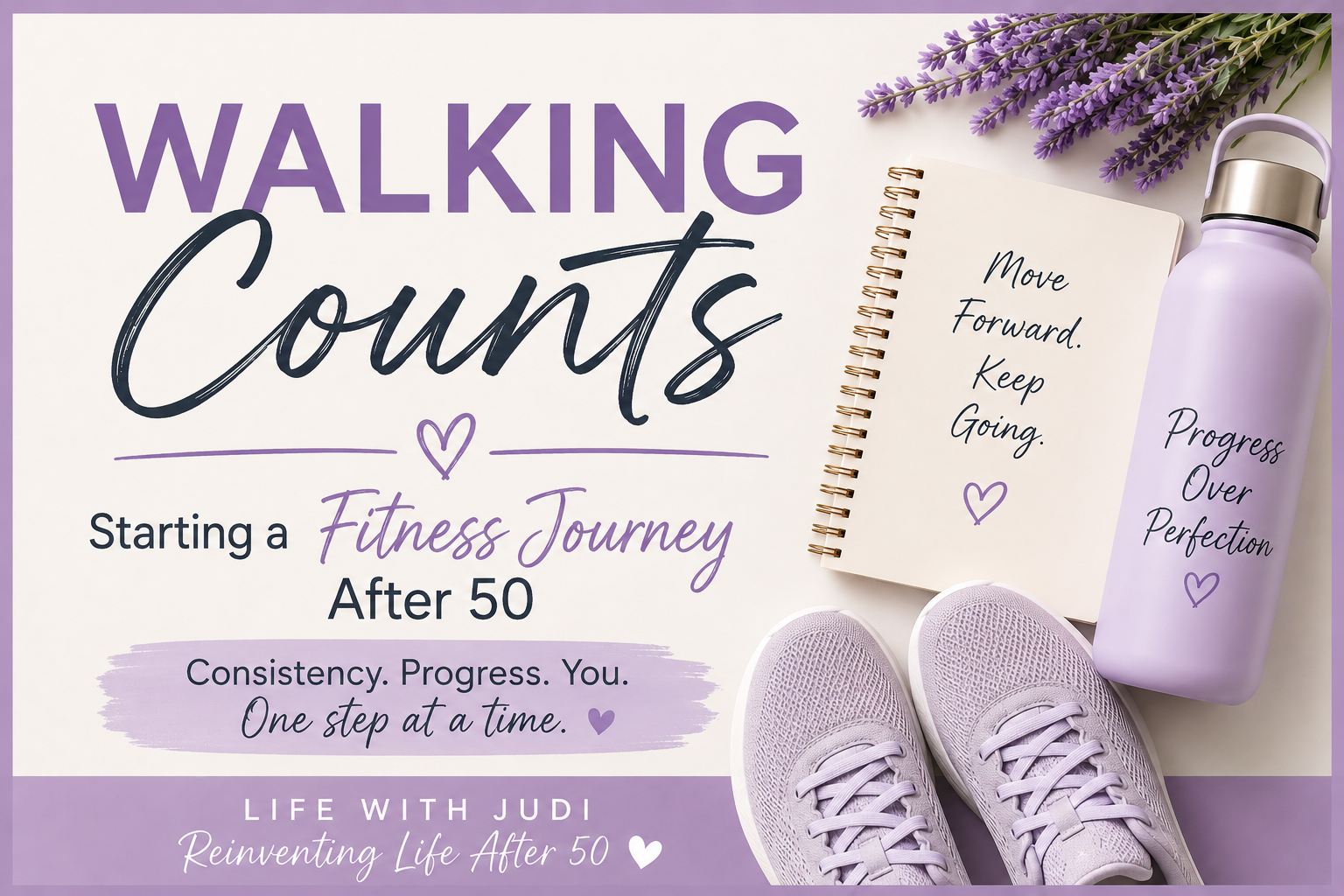
Walking counts.
Recovery counts.
Doing what works for your body counts.
Don’t let people make you feel inferior because you are doing the run/walk/run method. I have a faster pace than some people who just run, and I know I finish the race in a much better place.
At this stage of life, I am not interested in impressing people.
I am interested in crossing finish lines.
The Myth That Walking Doesn’t Count
Why do we believe this myth?
Maybe it’s because it’s what we’ve always been taught.
Maybe it’s because fitness gurus on Instagram keep telling us we need to go harder, run farther, and never slow down.
Or maybe our brains are just wired to think that if we’re running, we should be running 100% of the time.
I know that’s what I used to think.
If I had to walk, I felt like I was failing.
If I wasn’t running every step, somehow it didn’t count.
But that’s simply not true.
Walking is often where fitness journeys begin.
Walking is how many people build the endurance and confidence to eventually run.
Walking gives your body time to catch up to what you’re asking it to do.
And sometimes a walk break is exactly what keeps you healthy enough to keep training tomorrow.
Could I tell you there’s science behind all of this?
Absolutely.
If you want to dive into the research, I highly recommend Jeff Galloway’s book.
But honestly, I don’t need a study to tell me what I’ve experienced myself.
The run/walk/run method has helped thousands of people cross finish lines, including me.
It helped me complete my first runDisney half marathon.
It helps runners avoid injuries, recover better, and stay in the sport longer.
Most importantly, it reminds us that fitness isn’t about doing things the hardest way possible.
It’s about finding a way that works and sticking with it.
Don’t believe the myth.
Walking counts.
How Walking Helped Me
Let’s circle back to the beginning of my running journey in my 50s.
I had been a runner before.
Then I had an accident.
Big Army truck. Little Judi foot.
The Navy doctor basically told me, “I can’t fix it, and if you don’t use it, it’s only going to get worse.”
Not exactly the news I was hoping for.
But then came the lure of those pretty shiny runDisney medals.
Come on. You know the ones.
I knew if I was going to do runDisney, I had to train smarter, not harder.
The last thing I wanted was to spend all that money on a race weekend, do something foolish during training, aggravate my foot, and end up unable to do the race.
When I discovered that runDisney promotes the run/walk/run method, I knew I had found something that could work for me.
Walking helped me build endurance.
It helped me build confidence.
And most importantly, it kept me moving.
On training days, I followed the run/walk/run method and slowly built my mileage.
Something funny happened.
As my endurance improved, my pace improved too.
I know that sounds backwards.
You would think stopping to walk would make you slower.
But for me, it worked.
I wasn’t exhausted.
I wasn’t pushing so hard that I couldn’t recover.
I could keep showing up and doing the next workout.
And that consistency made all the difference.
Walking has helped me in other ways too.
When I’m traveling, I may not always have time for a full workout.
That doesn’t mean I stop moving.
A walk still counts.
A walk keeps me on track.
A walk is still progress.
One of my favorite examples happened after Princess Half Marathon Weekend.
Knowing I was planning to do Springtime Surprise just a month later, my goddaughter looked at me as we headed into the parks and said:
“Turn on your tracker. This absolutely counts.”
And you know what?
She was right.
Those park miles count.
Those park steps count.
They build endurance.
They build strength.
They keep you moving.
Walking may not look impressive on Instagram.
But walking has helped me finish races, recover better, stay active, and keep chasing goals that matter to me.
I’d call that a win.
Walking Is Often More Sustainable
Now here I could go down the geeky rabbit hole.
And above all else, hubby thinks I am a nerd.
But I want you to stop for a minute and think about something.
This isn’t really about the science.
It’s about the results.
Did it help me reach my goal?
The answer is yes.
My sister tells me running is going to ruin my knees.
Meanwhile, I am pushing 60 and still operating on all original equipment.
I think part of the reason is that I learned to train smarter.
Walking is:
- Lower impact
- Easier recovery
- Less intimidating
- More sustainable
- More consistent
And consistency is where the magic happens.
You can usually walk longer than you can run, especially if you are just getting started.
Let’s look at it this way.
You haven’t run in years, but you want to give it a try.
You lace up your shoes and head out the door.
Scenario 1
You decide you are going to run the whole mile without stopping.
Maybe you make it.
Maybe you don’t.
Either way, you come home exhausted, sweaty, sore, and thinking:
“I never want to do that again.”
Scenario 2
You run for 30 seconds and walk for 60 seconds.
You finish your mile.
You feel tired, but good.
You realize maybe this isn’t as impossible as you thought.
Maybe you could do it again tomorrow.
Maybe you actually enjoyed it.
I know which scenario I would choose.
I am solidly Team Scenario 2.
Because the workout you can repeat is always better than the workout that makes you quit.
And if it gets me to the finish line, that’s what matters.
The Secret Is Consistency
If there is one thing I have learned about fitness after 50, it is this:
Every single time.
Complete honesty here, a 20-minute walk is better than a completely skipped 60-minute run.
Why?
Because you are still showing up.
You are still moving forward.
You are still proving to yourself that your goals matter.
Some days you feel amazing.
Some days you don’t.
Some days the weather is terrible.
Some days life gets in the way.
Some days the couch sounds a whole lot more appealing than putting on your walking shoes.
I have had all of those days.
The difference is that walking gives me another option.
Maybe today is not the day for a long run.
Maybe today is not the day for speed work.
Maybe today is not the day I set a personal record.
But maybe today is the day I take a 20-minute walk.
And that still counts.
Every time you choose movement over doing nothing, you build momentum.
You build confidence.
You build the habit of keeping promises to yourself.
That little voice that says, “Do you really want to work out today?” never completely goes away.
Trust me, I still hear it.
The goal isn’t to silence it.
The goal is to keep moving anyway.
Walking helps me do that.
Walking helps me stay consistent.
And consistency is what gets us to the finish line.
Final Thoughts
Funny thing about life is you have to start where you are, not where you want to end up.
Starting is what gets you there, but you still have to take the journey.
When I first started running again in my 50s, I thought success meant running every step.
What I eventually learned was that success meant finding a way to keep going.
For me, that way was walking.
If walking is what helps you keep going, then walking is exactly what you should be doing.
Those gurus on Instagram are not on your journey.
Your journey is uniquely yours.
Pick your own path.
Show up for yourself.
Keep moving forward, even when it feels slow.
Because some days the biggest victory isn’t setting a personal record.
It’s simply refusing to quit.
And if all you did today was take a walk?
That counts.
Walking counts.